Stefan Uhlig hat in Polen einen interessanten Klimavortrag gehalten:
+++
Leserpost von Guido Meyer:
Werte Redaktion,
Es gibt eine umfassende Liste aller bekannten Hochwasserereignisse in Wilipedia
https://de.wikipedia.org/wiki/Liste_von_Hochwasserereignissen_an_der_Ahr
+++
Newsletter der Friends of Science Society: www.friendsofscience.org
Offshore Wind Turbines Steal Each Other’s Wind: Yields Greatly Overestimated
A new study using an analytical model of wind farms shows that national policy targets assume up to 50% more energy production than what can be achieved. The model was validated by energy data from 72 windfarms. The study says “Such overestimation not only hides true energy costs but also underestimates power variability, integration, and curtailment risks, and it distorts policy pathways. When projections exceed physical limits by such margins, the resulting electricity shortfall can destabilize decarbonization strategies and reach deep into society and the economy.” The paper’s summary says “The model clarifies the critical design trade-offs between turbine height, specific power, and wind farm density. Our model provides a rigorous yet simple framework, readily usable by engineers, planners, and policymakers to forecast wind farm performance, support system planning, and to set realistic targets consistent with aerodynamic limits.” The paper’s conclusion says “This study establishes a physically grounded upper limit on wind farm performance, demonstrating that aerodynamic constraints impose a fundamental ceiling on the energy extractable from the marine atmospheric boundary layer.”
The study is discussed in this article by Bert Weteringe, an expert on wind turbines. „Wind turbines literally steal each other’s wind, which means that the efficiency of wind turbines will decrease even further as their number increases. In seven of the nine case studies, the national policy targets for offshore wind yields turned out to be way overestimated.“ The resulting shortfall in electricity revenues „could have a profound impact on society and the economy.“
Save LBI Says Offshore Wind Projects Grossly Underestimate Harm to Marine Mammals
Save Long Beach Island, Inc. (Save LBI) is an organization dedicated to preserving the shore and ocean environment. It contends that the high levels of noise generated during the surveying, construction, and operation phases of an offshore wind project have a detrimental effect on sea mammals. This article says “Because hearing acuity plays a central role in the ability of a whale or dolphin to navigate its surroundings — especially during migration — elevated noise can cause serious harm, including impaired or permanent hearing loss, and behavioral disturbances that can also lead indirectly to harm and death.” For years, NOAA has ignored research presented by Save LBI. The organization has recently petitioned NOAA to overhaul the flawed methodology being used for calculating “Takes” — instances of fatality, serious harm, or behavioral disturbance to whales and other marine mammals. The petition cites major scientific and mathematical errors in NOAA approved “Take estimation” methods and presents calculations that show significant harm and disturbance to whales and other mammals in the vicinity of offshore wind projects. Save LBI has also asked NOAA to require a monitoring program that will either verify the calculations in its Take estimation method or revise those methods. The program should provide data to verify noise reduction assumed from using bubble curtains around the pile driving operations, as well other noise-related parameters. Save LBI President Bob Stern said “We ask them to put forward a monitoring program in conjunction with that review that will either verify or disprove the concerns we have raised. If our concerns are verified, then NOAA should define and require the use of new mathematically and scientifically defensible methods for calculating marine mammal Takes.”
Climate Alarmist’s Credibility Sinks Under Weight of Ecological Evidence
This article by Vijay Jayaraj shows that the climate alarmism and the climate emergency, which are built on flawed computer models, are collapsing under the weight of the reality of good environmental news. Jayaraj wrote “For decades, activists have anchored their case in dramatic warnings about species extinction, melting ice caps and the end of polar life, failing ecosystems and vanishing biodiversity. The goal was to spread fear. The world’s largest nations have actually expanded their forest area significantly. Between 2015 and 2025, China added approximately 4 million acres of forest while Russia gained more than 2 million acres and India gained nearly a half million acres of forest. Polar bear populations have not declined over the last 15 years despite dire predictions. Between 2014 and 2022, the number of India’s tigers grew from 2,226 animals to 3,682. This represents a 65% increase over eight years, with an annual growth rate exceeding 6%. species extinction rates have not accelerated. Instead, they peaked over a century ago and have been in decline since the early 1900s. The great die-off turned out to be a phantom. Past extinctions were largely driven by invasive species on isolated islands, not by habitat loss or the alleged ‘climate crisis’. Famine failed to materialize as farmers across the globe brought in record harvests. Crop yields have increased substantially, enabling farms to feed more people while using less land. The new media is silent about these victories. These stories are buried because they don’t sell fear.
+++
Leserpost von Dieter Reinisch:
Sehr geehrte Redaktion,
der wirkliche letzte und dabei noch lebende Universalgelehrte Prof. Harald Lesch hat in den Räumen der Bauhaus – Universität Weimar vor Mitgliedern der Energiegenossenschaft Ilmtal eG einen Vortrag über die Sinnhaftigkeit der EE- Stromerzeugung und so über die Notwendigkeit des verstärkten Zubaus von Photovoltaik und Windkraft gehalten.
Es hörte sich so an, als ob der Professor 100% EE bei der Stromerzeugung für machbar und gänzlich alternativlos hält, trotz der damit verbundenen Probleme bezüglich Netzstabilität und Versorgungssicherheit, deren Ursachen in dem schon jetzt erreichten hohen EE- Anteil zu finden sind.
Der ihm gespendete Applaus deutet an, dass nur wenige Studenten und Lehrkräfte der Universität anwesend waren, jedenfalls kaum solche aus relevanten Fachrichtungen!
Etwa ab Minute 6 : 35 seines Vortrages begann Professor Lesch darüber zu dozieren, welche enorme Klimawirksamkeit CO2 hat, vor allem dadurch dass diese träge Verbindung von der Natur kaum abgebaut wird. CO2 werde komplett akkumuliert und verbleibt über Jahrhunderte und über Jahrtausensende klimaschädlich wirkend in unserer Atmosphäre.
Es kommt deshalb jetzt auf jede „eingesparte“ Tonne CO2 an!
Die sichtlich betroffenen Zuhörer hörten aber kein Wort darüber, dass dieser Abbauprozess, wie so oft in der Natur, nach einer typischen Sättigungs- oder Abklingkurve verläuft, also mit hohem Tempo startet.
Ich habe von Chat GPT die nachstehende Liste generieren lassen, die exakt der IPCC‑Abklingkurve entspricht.
Demnach werden innerhalb von nur 30 Jahren Abklingzeit ca. 43% des CO2 wieder abgebaut!
Andere ernstzunehmende Wissenschaftler kommen bei Verwendung anderer Modelle zu wesentlich höheren Abklingwerten, so zum Beispiel fast 50% nach nur 20 Jahren.
Tabelle: Verbleibender Anteil einer CO₂‑Emission (IPCC‑Bern‑Modell)
Alle Werte: Anteil der ursprünglichen Emission, der noch in der Atmosphäre ist.
| Zeit nach Emission | Anteil verbleibend | Anteil abgebaut |
| 1 Jahr | ~88 % | ~12 % |
| 5 Jahre | ~78 % | ~22 % |
| 10 Jahre | ~72 % | ~28 % |
| 20 Jahre | ~63 % | ~37 % |
| 30 Jahre | ~57 % | ~43 % |
| 50 Jahre | ~50 % | ~50 % |
| 70 Jahre | ~46 % | ~54 % |
| 100 Jahre | ~42 % | ~58 % |
| 200 Jahre | ~33 % | ~67 % |
| 500 Jahre | ~25 % | ~75 % |
| 1000 Jahre | ~22 % | ~78 % |
| 10 000 Jahre | ~15–20 % | ~80–85 % |
Diese Werte entsprechen exakt der IPCC‑Abklingkurve!
Kurze Zeit später verkündet der Professor diese vom Spiegel am 06.04.2025 veröffentlichte Meldung als Sensation:
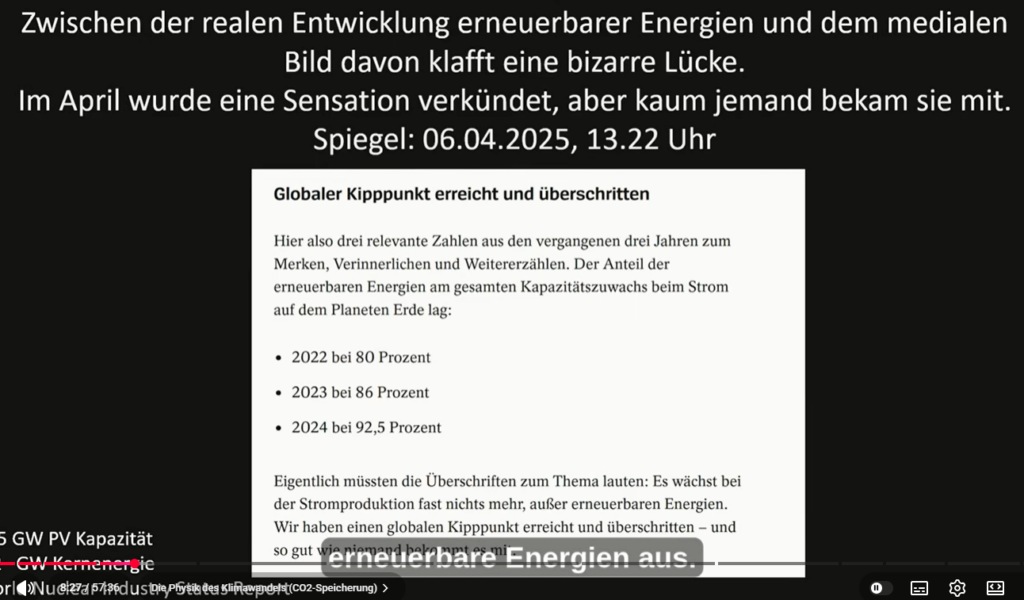
Aber was bedeuten diese Zahlen wirklich?
Es wird nur eine Auswertung des Zubaus der installierten Leistung vorgenommen. Das ist keine Aussage darüber, welche Energiemenge damit produziert werden kann, außerdem beinhaltet hier die EE auch den Anteil Nuklear!
Diese Zahlen sind zwar korrekt, sind aber bedeutungslos, weil diese nicht die miserablen Volllaststundezahlen der EE (Nuklear ausgenommen!) berücksichtigen!
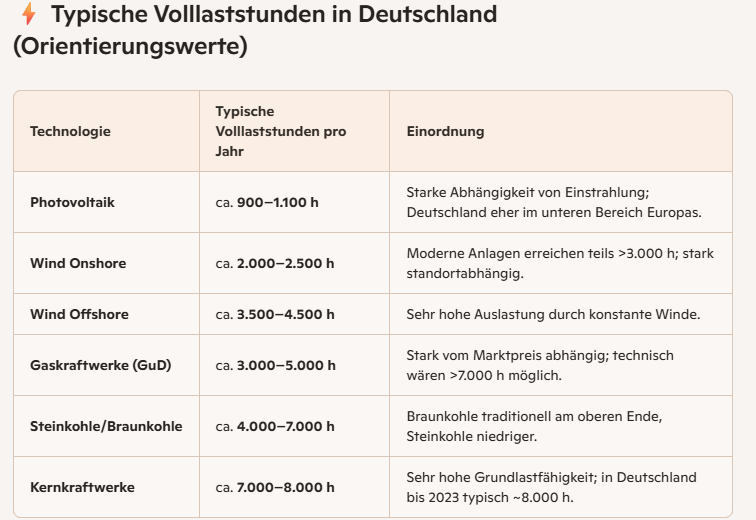
Wirkliche Aussagen erhält man, wenn der Strommix der jeweiligen Jahresproduktion zugrunde gelegt wird!
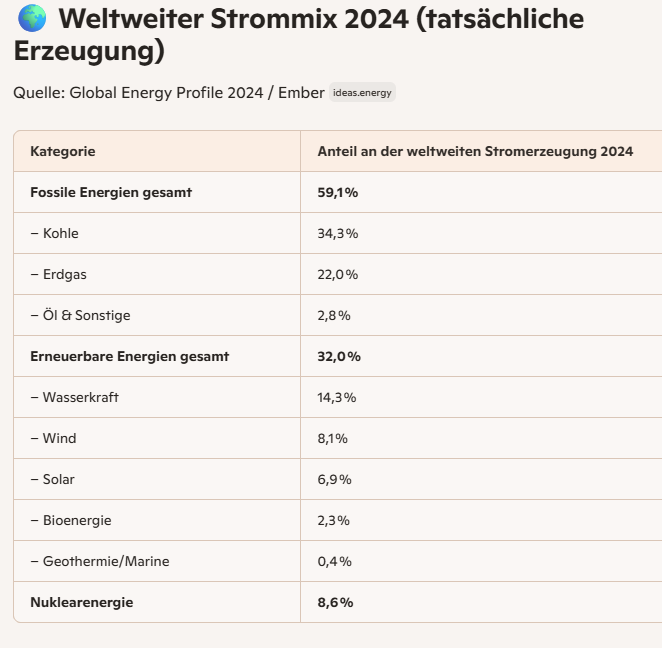
Bei Zurechnung der Nuklearenergie beträgt der Anteil der fossilen Energie 67,7%, der damit mehr als doppelt so groß ist wie EE! Die vom Spiegel veröffentlichten und von Professor Lesch als Riesensensation weitervermittelten Zahlen täuschen (absichtlich?) ein falsches Bild vor.
Professor Lesch sollte künftig deutlich weniger Vorträge halten, diese aber besser durch qualifizierte Recherchen vorbereiten und auf Alarm verzichten.
Weniger ist immer mehr, sagt man jedenfalls!